
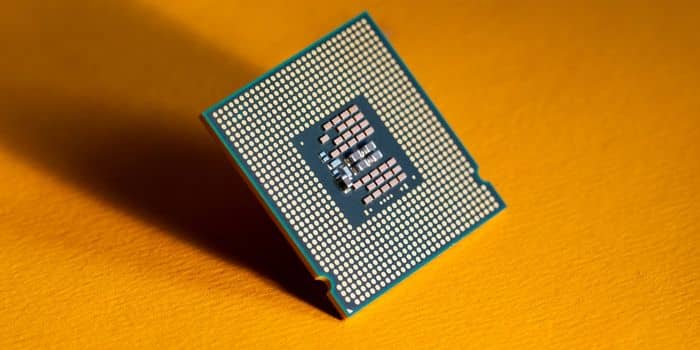
On June 1st, AMD held its annual Technology Analyst Conference at their headquarters in Sunnyvale, CA. While much of it focused on AMD and its overall business strategy for the next few years, a good chunk was dedicated to K8L.
Phil Hester, Corporate Vice President and Chief Technology Officer gave a relatively detailed presentation discussing K8L’s modular design and K8L quad-core specification.
Below is a brief summary of the presentation by Hester, detailing K8L’s specification, something called DICE, and AMD’s vision of modular “building blocks.”
AMD Talk Modular
Before the details were given on K8L, Hester made it clear that AMD’s new philosophy moving into 2007 will centralize around modular design. It is clear that AMD believes the modular approach will allow them to deliver architectural tweaks quickly and efficiently when the need for them arises in market segments.
If you look inside a microprocessor today, you will find perhaps 10 to 15 major functional groups, and these are mostly applied within a monolithic design. It is possible to identify each functional group individually, but the interfaces between them are not as clear or definable as they could be. The problem with this is that it takes a lot of engineering resources to modify how these individual yet undefined pieces work to create an updated processor model.
AMD’s modular concept is to better define each of the building blocks so as to easily construct optimal designs for each of the market segments. This will allow AMD to do two things.
Firstly, it will enable them to have one core architecture but develop very different processors for each market segment, and secondly, it will be far easier for AMD to change specific functional groups so as to increase performance in the server market or desktop market, or the low power market, basically whenever they need to react to the needs of a specific market they can quickly and cost-effectively provide solutions. We may never again see a new architecture in the traditional sense as AMD can continually update any of the building blocks to effectively create a new processor family.
If you look at the diagram above it indicates how modular architecture works. The “building blocks” as AMD like to call them, are shown within the yellow border and can be configured differently so to better construct optimized processor designs for each of the different markets. The blocks in red are two example configurations of how it can be used to better serve different markets, even unforeseen markets. The one on the left is an example of a dual-core design built to serve the desktop market, on the right an example of a quad-core design better suited for server demands, but both using the same core building blocks.
The gray box named “other” represents extra capacity for new functional blocks which can be added in the future. Possible uses here could be for co-processor functionality, and so on. The genius behind modular should be clear to all.
K8L Details & Specification
While the focus around K8L has regarded a quad-core design, the modular concept discussed by AMD indicated that any number of configurations can be made available.
On this slide, you can clearly see evidence of a dual-core K8L in the lineup. It was said that quad-core models will be aimed towards the server and high-end desktop segments, while dual-core will be desktop only. It’s not clear if, at launch, dual-core K8Ls will be the new Semprons, so to speak, or if quad-core K8Ls will start off exclusively in the FX range; time will tell.
KL8 has been designed from the ground up to be quad-core. It is a true quad-core design, not two dual-cores glued together. It will be the first processor to come off the modular design wheel discussed earlier in this article. K8L is optimized for the 65nm die process, but there was talk of 45nm parts in the future, though you’ll have to wait until mid-2008 for those.
Cache Structure
K8L will have a three-level cache structure. AMD makes a point of stating that Intel’s approach of “a larger cache means better performance” is not always the case and that it has more to do with how efficiently that cache talks to the main memory structure. AMD believes that having an onboard memory controller means they have the advantage here, but then they would say that.
Each core of the K8L will have an LV1 cache of 64KB and an LV2 cache of 512 KB. The new introduction here is a 2MB LV3 cache that is shared between all four cores. AMD made it clear that if certain market segments require a larger LV3 cache in the future, it is well within their capability to do so because of the modular concept.
Improved Performance in FPU
K8L doubles the width of the floating point execution units and increases the data width feeding the FPUs by a factor of 2x. AMD claims that adding up all the changes here equates to a 3x improvement in FPU performance, but they gave very few details to back this up.
Have a look at AMD Bulldozer FX-8150 Processor. Also, you may check the Z790 motherboard and X670 motherboard guide.
DICE: Dynamic Independent Core Engagement
The computing industry is largely focused on power efficiency these days, and quite rightly so. To help maximize the efforts in this area, the K8L will have a power management feature called DICE. It essentially allows each separate core’s frequency to be dynamically controlled.
In the real world, a processor, whether it’s desktop or server-orientated, does not have a continuous workload of 100%. Now we’re moving into the age of multiple-core computing, it is essential that a feature such as DICE is implemented.
The diagrams above demonstrate how DICE works. In the first diagram, all four cores are fully loaded, and this represents 100% power consumption of K8L. The second diagram it shows each core at different workloads, with two cores actually halted when not in use, thus decreasing power consumption by over half.
I’m slightly suspicious of these claims as a system in idle will naturally consume less power than at full load. DICE is not actually responsible for the massive reductions shown in the slides, but it definitely helps.
The 4×4 Stop Gap
K8L will not be the first mainstream quad-core system to market. In the same presentation by Hester, the 4×4 platform was announced.
Details of 4×4 were quite sketchy, to be honest, but it’s clearly designed to take our minds off Conroe. The counter-attack is a new dual-socket desktop platform called 4×4, allowing end-users to run two dual-core sockets AM2 processors in tandem. Unlike dual-Opteron motherboards, 4×4 will use mainstream unbuffered DDR2, but it will still retain AMD’s Direct Connect architecture, which provides dedicated channels between each of the CPU cores out to the system memory.
One interesting path 4×4 brings is an upgrade route similar to what SLI allows with GPU power. You can start with one dual-core processor, and when you need more computing power, you can simply add another.
For 4×4 to really take off, it will need some killer multi-thread applications (games). Otherwise, I don’t see many enthusiasts getting all wobbly-legged and ordering what will be a small fortune’s worth of AMD silicon from their favorite e-tailers. It is inevitable that true multi-threaded next-gen games will eventually turn up, and when they do, 4×4 will be what every enthusiast will want for Christmas; what is not clear is if it’ll be Christmas 2006 or 2007…
Conclusion
In conclusion, the AMD Quad-Core K8L and 4×4 were two innovative technologies released by AMD in 2007. The Quad-Core K8L was a powerful processor that aimed to compete with Intel’s Core 2 Quad series, while the 4×4 was a multi-processor system designed for high-performance computing. Both technologies had their strengths and weaknesses, with the Quad-Core K8L excelling in single-threaded applications and the 4×4 being ideal for multi-threaded workloads.
However, despite their potential, these technologies did not gain widespread adoption in the market. Intel’s Core 2 Quad ultimately proved to be more successful in terms of performance and price, while the 4×4 was too expensive and niche for most consumers.
Nonetheless, the AMD Quad-Core K8L and 4×4 were important milestones in the company’s history, demonstrating its commitment to innovation and competition in the CPU market. While these technologies may not have been as successful as intended, they paved the way for future processor design and architecture advancements.
